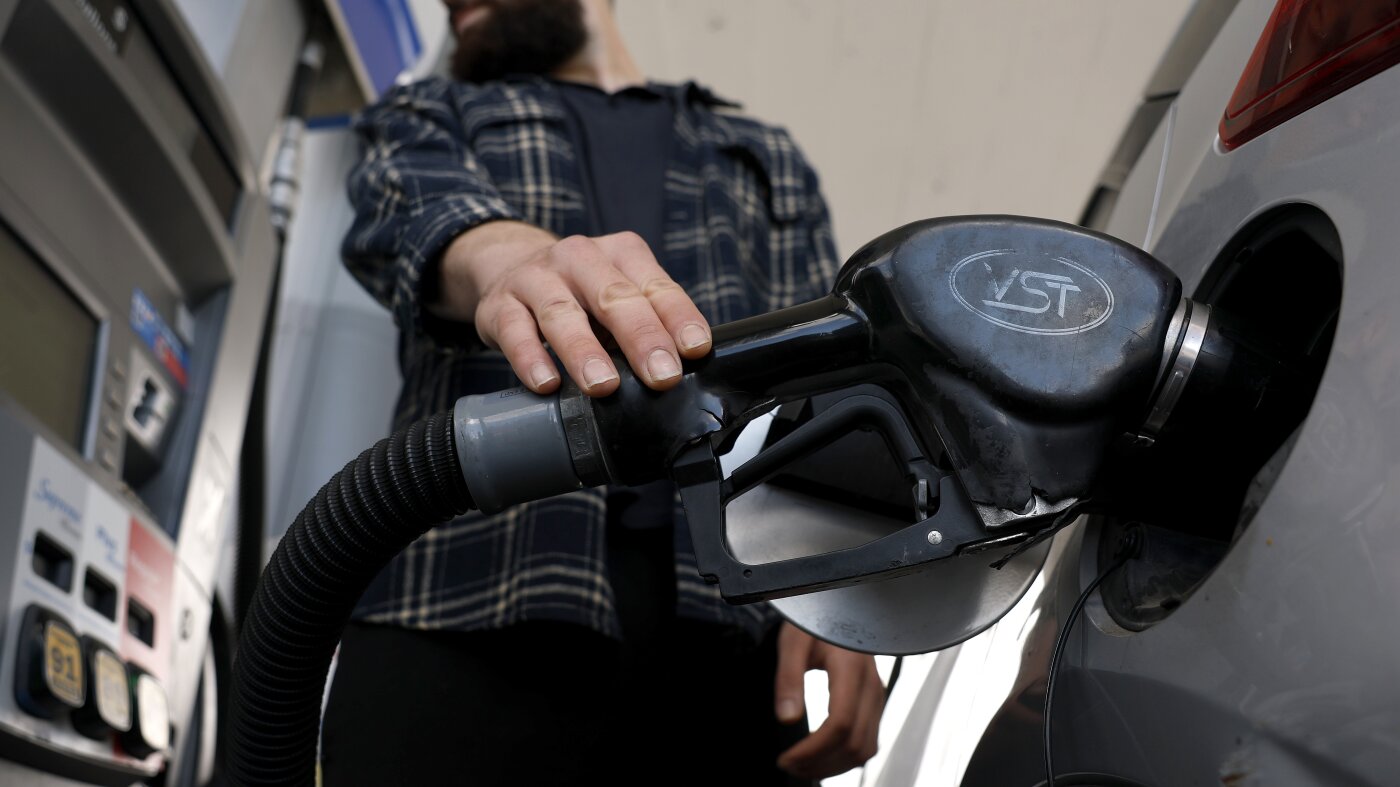
Fuel Saving Strategies - follows evolving financial market trends and investor reaction across Wall Street. The national average for a gallon of gasoline stands at $4.55 as the United States enters one of its busiest travel weekends of the year. To manage higher fuel costs, drivers are considering slower driving, switching to electric vehicles, or reducing trips altogether.
Live News
Fuel Saving Strategies - follows evolving financial market trends and investor reaction across Wall Street. Volatility can present both risks and opportunities. Investors who manage their exposure carefully while capitalizing on price swings often achieve better outcomes than those who react emotionally. The latest national average gasoline price of $4.55 per gallon has been reported as millions of Americans prepare for a peak travel weekend. According to the source, motorists are weighing several options to reduce fuel expenses, including driving at slower speeds, adopting electric vehicles (EVs), and minimizing or eliminating non-essential driving. Driving slower can improve fuel efficiency—the U.S. Department of Energy notes that each 5 mph decrease in highway speed may improve fuel economy by 7% to 14%. Switching to an electric vehicle would eliminate gasoline costs entirely, though upfront purchase prices and charging infrastructure remain considerations. For those unable to change vehicles, combining errands, carpooling, or using public transit could reduce total miles driven. The source does not provide specific savings estimates beyond these general strategies. The $4.55 figure represents a notable increase from recent norms, though it is not a record high. The timing coincides with the Memorial Day weekend or another holiday period, depending on the year, when gasoline demand typically peaks. Higher prices may be influencing travel plans, but the exact impact on aggregate demand remains unclear.
As Gas Prices Hit $4.55, Drivers Explore Fuel-Saving Strategies Ahead of Busy Travel Weekend Technical analysis can be enhanced by layering multiple indicators together. For example, combining moving averages with momentum oscillators often provides clearer signals than relying on a single tool. This approach can help confirm trends and reduce false signals in volatile markets.Volume analysis adds a critical dimension to technical evaluations. Increased volume during price movements typically validates trends, whereas low volume may indicate temporary anomalies. Expert traders incorporate volume data into predictive models to enhance decision reliability.As Gas Prices Hit $4.55, Drivers Explore Fuel-Saving Strategies Ahead of Busy Travel Weekend Macro trends, such as shifts in interest rates, inflation, and fiscal policy, have profound effects on asset allocation. Professionals emphasize continuous monitoring of these variables to anticipate sector rotations and adjust strategies proactively rather than reactively.Expert investors recognize that not all technical signals carry equal weight. Validation across multiple indicators—such as moving averages, RSI, and MACD—ensures that observed patterns are significant and reduces the likelihood of false positives.
Key Highlights
Fuel Saving Strategies - follows evolving financial market trends and investor reaction across Wall Street. Understanding cross-border capital flows informs currency and equity exposure. International investment trends can shift rapidly, affecting asset prices and creating both risk and opportunity for globally diversified portfolios. Key takeaways from the latest data include the pressure on household budgets from elevated gasoline costs. For consumers, even small behavioral changes—such as reducing speed by 5–10 mph, ensuring proper tire inflation, and avoiding excessive idling—could cumulatively lower fuel bills. Electric vehicles present a longer-term option, but high upfront costs and limited charging access may slow widespread adoption. From a market perspective, sustained high gasoline prices could lead to reduced driving miles and lower demand for gasoline, potentially easing price pressures over time. Conversely, if demand remains robust during the travel weekend, prices could stay elevated. The energy sector may see mixed impacts: oil refiners could benefit from high margins, while retailers of gasoline might face volume declines as consumers cut back. No specific forecasts have been provided in the source, but historical patterns suggest that consumers often adjust behavior when prices cross psychological thresholds like $4.00 per gallon. The shift toward fuel-efficient vehicles, including hybrids and EVs, tends to accelerate in such environments.
As Gas Prices Hit $4.55, Drivers Explore Fuel-Saving Strategies Ahead of Busy Travel Weekend Some investors rely heavily on automated tools and alerts to capture market opportunities. While technology can help speed up responses, human judgment remains necessary. Reviewing signals critically and considering broader market conditions helps prevent overreactions to minor fluctuations.Observing market cycles helps in timing investments more effectively. Recognizing phases of accumulation, expansion, and correction allows traders to position themselves strategically for both gains and risk management.As Gas Prices Hit $4.55, Drivers Explore Fuel-Saving Strategies Ahead of Busy Travel Weekend Global macro trends can influence seemingly unrelated markets. Awareness of these trends allows traders to anticipate indirect effects and adjust their positions accordingly.While technical indicators are often used to generate trading signals, they are most effective when combined with contextual awareness. For instance, a breakout in a stock index may carry more weight if macroeconomic data supports the trend. Ignoring external factors can lead to misinterpretation of signals and unexpected outcomes.
Expert Insights
Fuel Saving Strategies - follows evolving financial market trends and investor reaction across Wall Street. Scenario planning prepares investors for unexpected volatility. Multiple potential outcomes allow for preemptive adjustments. For investors, the current gasoline price environment may have implications across several sectors. Automakers with strong EV lineups—such as Tesla, General Motors, and Ford, among others—could see increased interest from consumers looking to avoid gasoline costs. However, the transition to electric mobility remains gradual, and traditional internal combustion engine vehicle sales may not decline sharply in the near term. The energy sector might experience mixed outcomes: upstream oil producers could benefit from sustained high prices, while downstream companies (e.g., refiners and fuel retailers) could face margin compression if demand falls. Renewable energy and battery storage stocks could also attract attention as alternatives to gasoline-dependent transportation. Broader economic impacts are worth monitoring. Higher gasoline prices act as a tax on consumers, potentially reducing discretionary spending in other areas. This could weigh on consumer-facing stocks and retail sectors that are not energy-related. However, the effect may be moderate if prices stabilize or decline after the holiday weekend. Disclaimer: This analysis is for informational purposes only and does not constitute investment advice.
As Gas Prices Hit $4.55, Drivers Explore Fuel-Saving Strategies Ahead of Busy Travel Weekend Some traders rely on patterns derived from futures markets to inform equity trades. Futures often provide leading indicators for market direction.Analyzing intermarket relationships provides insights into hidden drivers of performance. For instance, commodity price movements often impact related equity sectors, while bond yields can influence equity valuations, making holistic monitoring essential.As Gas Prices Hit $4.55, Drivers Explore Fuel-Saving Strategies Ahead of Busy Travel Weekend Some traders find that integrating multiple markets improves decision-making. Observing correlations provides early warnings of potential shifts.Cross-asset analysis helps identify hidden opportunities. Traders can capitalize on relationships between commodities, equities, and currencies.